Don’t hesitate …Make it a habit of using Menstrual cups
Women can replace the services offered by
sanitary pads and tampons during a menstruation with menstrual cups. Yeah even
if it is late Indian women also started moving into the use of menstrual cups.
It has found a place in the major medical stores in India. Undoubtedly it’s a
fine eco-friendly alternative to the sanitary pads and tampons.
What prevented women from using it was the ignorance of its method of use.
Health experts also affirm that they are hygienic than conventional methods and
are not harmful to health. They were popular from the 1930s in Europe.
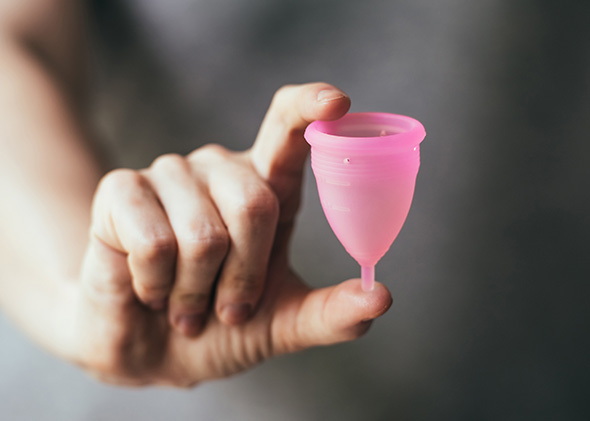
Women can replace the services offered by
sanitary pads and tampons during a menstruation with menstrual cups. Yeah even
if it is late Indian women also started moving into the use of menstrual cups.
It has found a place in the major medical stores in India. Undoubtedly it’s a
fine eco-friendly alternative to the sanitary pads and tampons.
What prevented women from using it was the ignorance of its method of use.
Health experts also affirm that they are hygienic than conventional methods and
are not harmful to health. They were popular from the 1930s in Europe.
Benefits of using a menstrual cup:
• Its function is to prevent menstrual blood from
leaking onto clothes. If correctly inserted, the cup shouldn't leak or
cause any discomfort, as with a tampon
.
• Sanitary pads
and tampons need to be changed every four to six hours, sometimes sooner,
depending on your flow. Menstrual cups may be kept in place 8+ hours (no more
than 12 hours).
• It can
collect more than twice as much as absorbed by sanitary napkins. Menstrual cups
are more useful for people have a heavy flow.
• There is no
chance of bad odour as there is no contact with the atmospheric air.
• Unlike tampons,
there is less possibility of infections too.
•
One cup is reusable for up to 10 years or more. This makes the overall
long-term cost lower than the cost of disposable tampons or pad.
• With the use of a menstrual cup, we are saved from the
practical difficulty in the disposal of sanitary pads and tampons.
•Considering its long-term use, it is financially
feasible.
.
• It can collect more than twice as much as absorbed by sanitary napkins. Menstrual cups are more useful for people have a heavy flow.
• There is no chance of bad odour as there is no contact with the atmospheric air.
• Unlike tampons, there is less possibility of infections too.
• One cup is reusable for up to 10 years or more. This makes the overall long-term cost lower than the cost of disposable tampons or pad.
• With the use of a menstrual cup, we are saved from the practical difficulty in the disposal of sanitary pads and tampons.
•Considering its long-term use, it is financially feasible.
Menstrual Cups: How it works?
It's a product made of medical grade silicone
or latex that is inserted into the vagina during a menstruation. Menstrual cups
are shaped like a bell with a stem. The stem is used to push gently into the
vagina and remove from it. The bell-shaped cup seals against the vaginal wall
just below the cervix. Unlike tampons and pads, cups collect menstrual blood
rather than absorbing it. Every 6 to 24 hours (depending upon the amount of
flow), the cup is removed, emptied, cleaned and then reinserted. After each menstrual
cycle, the cup is sterilized in boiling water for a few minutes and re-used.
What material should you look for when
selecting a menstrual cup?
Menstrual cups are generally made from three materials. These
materials are silicone, natural gum rubber and thermoplastic elastomer (TPE). Silicone menstrual cups are made of
medical grade silicone which means it is higher quality. Those whose are
allergic to latex or natural gum rubber must look at silicone cup.
What size should you choose for?
You should choose the appropriate size of
menstrual cups. Most menstrual cup brands sell a smaller and a larger size. The
smaller size is recommended for women under 30 who have not given birth
vaginally. The larger size is recommended for women who are over 30, have given
birth vaginally, or have an unusually heavy flow. The small size cup is
recommended for teenagers, as well as women and girls who are more physically
fit, as those with stronger pelvic floor muscles may find a larger cup
uncomfortable.
Does length matter when it comes to the safety of your menstrual
cup?
Length of the cup also needs to be considered:
if a female's cervix lies particularly low, she may want to
use a shorter cup. If it's hard to reach (or you can't reach it at all) your
cervix is high and you'll likely want a longer cup.
Does length matter when it comes to the safety of your menstrual cup?
Should you choose a firmer menstrual cup?
A final consideration in selecting a menstrual
cup is firmness or flexibility. Some companies offer a range of firmness levels
in their cups. A firmer cup pops open more easily after insertion and may hold
a more consistent seal against the vaginal wall ( for preventing leakage). But
many women find softer cups more comfortable
No medical research has proved of its side effects.
People who have adopted contraceptives
like Copper T should take some precautions. When the cup is inserted into
vagina there is the possibility of dislocation of Copper T.
No medical research has proved of its side effects.


Comments
Post a Comment
you are welcome to comment